They’re additional non-public jet-setters.
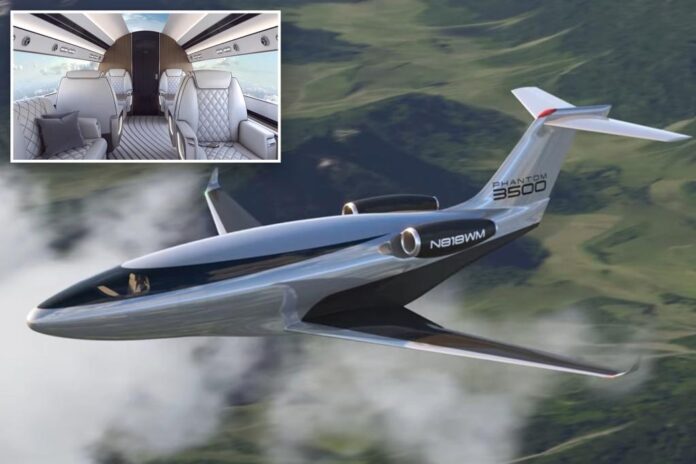
The concept of a window seat might become out of date — at least in the non-public sector. An aviation startup called Otto Aerospace has designed what could be the non-public jet of the future, full with higher fuel effectivity — and perhaps most shockingly — no conventional portals to the outside.
Instead, the smooth Phantom 3500’s teardrop-shaped cabin will be lined with six-foot digital panes that show a digital view of the outdoor like something out of a sci-fi thriller, the Wall Street Journal reports.
“You no longer have to lean over and look out the window,” Chief Executive Paul Touw. “You could sit in our seat and look at the entire world around you…It is surreal.”
The panels offer a panoramic, digitized vista of the outside. Otto Aerospace/YouTube
And it seems the nine-seater, high-roller plane is already in high demand. Otto’s first buyer Flexjet, a non-public jet firm, signed a contract to buy 300 of the jets over a six to eight-year period, with the first deliveries slated for 2030, Axios reported.
The deal could be price $5.85 billion primarily based on market pricing for each jet, which equates to a record price of around $19.5 million per plane, although they haven’t disclosed the negotiated worth of the deal.
Naturally, the concept of flying sans a common view to the outside of the plane — which measures 22-feet long and 7.5-feet broad — might appear akin to touring in a giant coffin.
However, the Phantom’s digital portals, which are powered by high-resolution cameras on the outside of the aircraft, offer a panoramic vista of the space around the jet that enhances the feeling of being suspended in the sky. The design’s also more interesting to tech-savvy Zoomers, per company reps.
Needless to say, many critics were none too-thrilled about the concept of a portal-less fuselage.
“No windows? Blimey, what’s next—flying in a big tin can?” spluttered one critic on X under the WSJ’s post. “Give me a proper view and a bit of fresh air over fancy shapes any day!”
“No windows, new shape, but luxury always finds a way to sell,” scoffed another, while a third declared that the design “sounds awful.”
However, the unconventional format isn’t just about the aesthetics. Touw claimed that the streamlined construction helps scale back fuel expenditure by 60% in contrast to business jets at this time — or 90% if we’re speaking sustainable engine diesel, Axios reported.
The Phantom will finally catch flight someday in 2027, says Otto Aerospace. Otto Aerospace/YouTube
This could show a main milestone in an industry identified for its greenhouse fuel emissions that’s also trying to obtain its net-zero objectives by 2050.
The potential insane fuel financial system could make non-public flights cheaper in the long run than flying business class.
This is important in an financial system where an growing quantity of rich Americans are trying to fly non-public.
“Everybody’s running around all excited about Firefly and SpaceX and Rocket Lab,” Touw said. “The market for moving wealthy people around the world every day is actually much bigger than the market for moving stuff into space.”
While Otto constructed its first full-size mock-up of the aircraft for a convention, the Phantom’s maiden flight won’t transpire until 2027, as it still wants FAA certification.