
Nintendo has spent the previous few a long time going from power to power with Mario Kart, so it’s not arduous to see why corporations holding other recognisable IP have wished to take a crack at the kart-racer method to see if they can pull a following of their own. While a lot of copycats have popped up over the years, one that’s made the most sense has been the Sonic franchise, as high-octane pace is form of the titular character’s complete appeal.
Sonic hasn’t always had the most pleasurable outings in the racing world, but he’s also had some that have gotten awfully close to matching Nintendo’s golden goose. Sonic Racing: CrossWorlds is one such entry, combining thrilling motion and controls with an fascinating multiverse gimmick to make for a worthwhile and pleasurable expertise. It’s just a disgrace that the base Switch actually struggles to run it nicely.
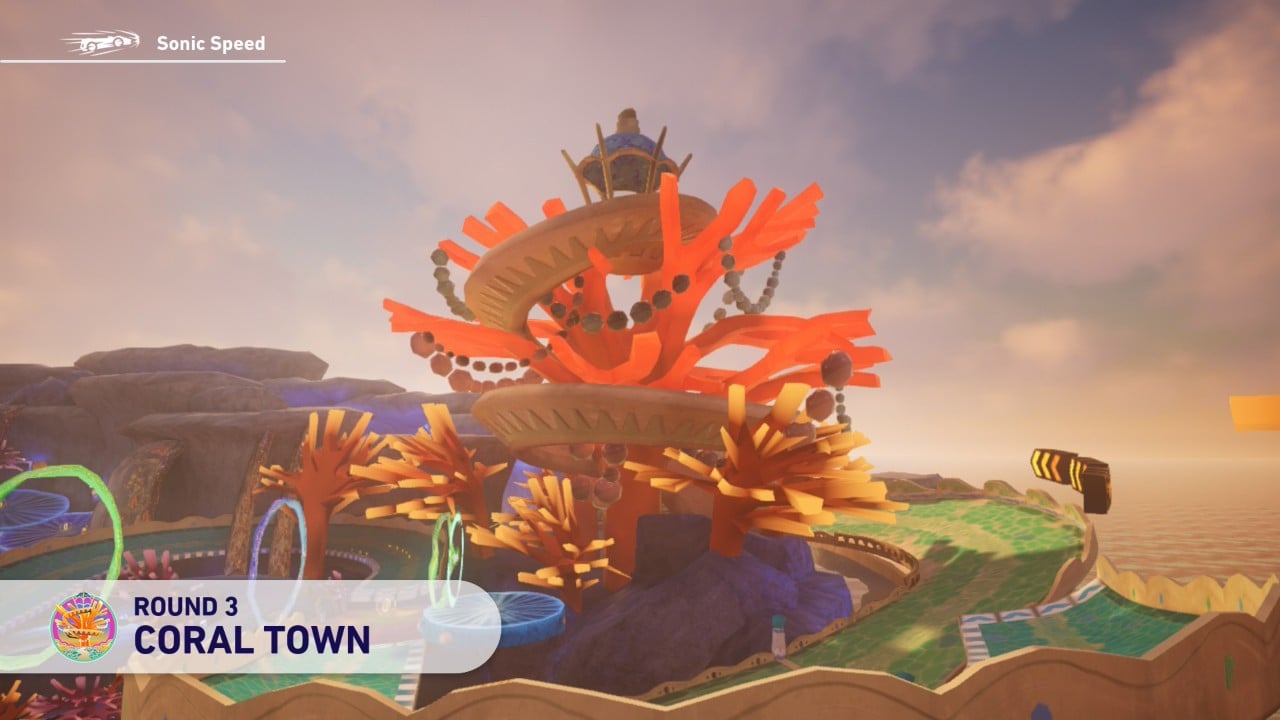
Gameplay in Sonic Racing: Crossworlds is roughly par for the course with what you’d expect for a kart racer, as you drift, enhance, and trick your means to victory across a sequence of three-lap, four-race cups that incorporate mind-bending programs and locales.
Effectively drifting corners, timing your boosts, and seizing on shortcuts are all half of a hard-fought victory, while occasional merchandise drops add an X issue that can both give you the edge you need to win first place or torpedo a lead that you’d been holding onto. Overall, the gadgets really feel nicely balanced, and they help to keep issues fascinating as their affect always adjustments up the formation of a race.
Tracks primarily consist of a combination of authentic programs and reimagined variations of basic Sonic programs from across the foremost sequence, such as Radical Highway from Sonic Adventure 2 or Water Palace from Sonic Rush. Overall, course design is extraordinarily sturdy, with a number of routes including to the replayability and strategy, while the fixed leaping between land, sea, and air parts retains issues feeling contemporary and fast-paced. Everyone will naturally have their favourites, but it’s powerful to argue against the general high quality of these tracks. There’s actually not a unhealthy one in the bunch.
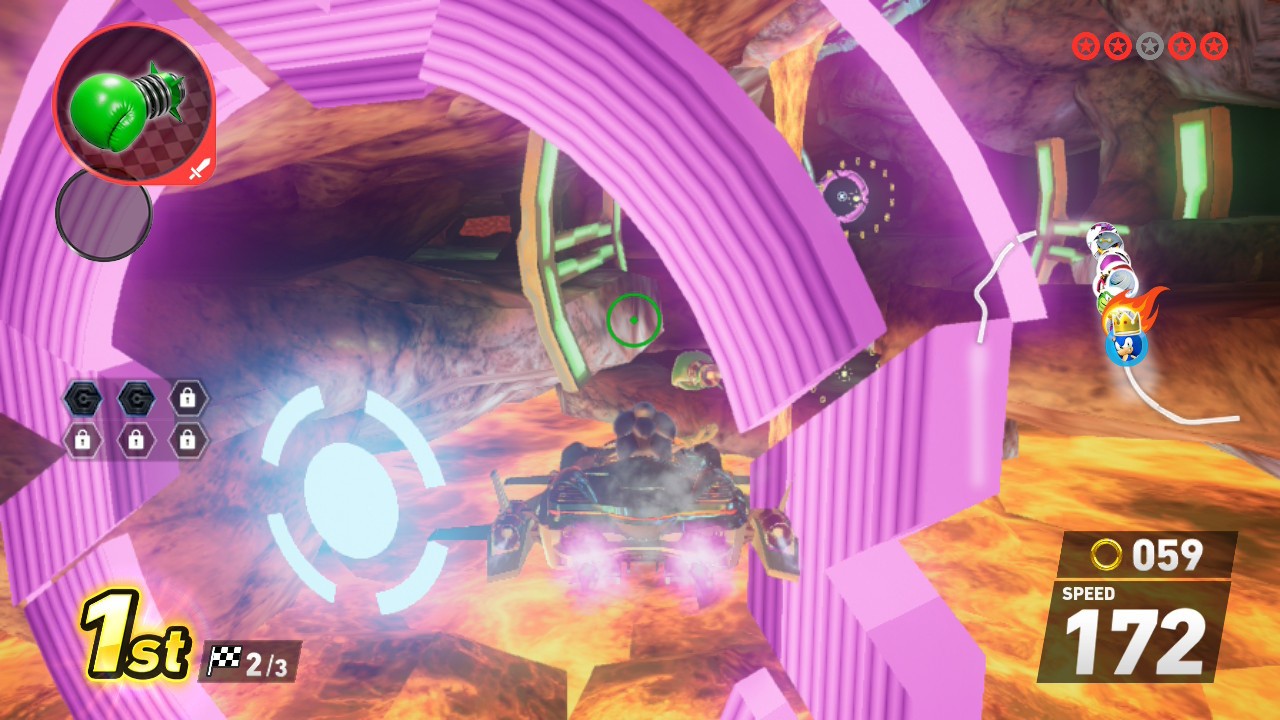
Most importantly, the central ‘Crossworlds’ gimmick makes the programs really feel dynamic in a means that most other kart racers battle to replicate. Upon nearing the finish of the first la, the competitor presently in the lead will be given a selection between two different programs you will then traverse for the period of lap two. So, you can start a race in Seaside Hill, then leap to Mystic Jungle for a lap before returning to Seaside Hill to end issues up. Given that any stage can seem at the finish of lap one, each contest feels contemporary and thrilling given that consecutive races beginning on the same course can have radically totally different routes to the end line.
If you need to combine issues up beyond the base Grand Prix mode, there’s also a Race Park mode. Here, you take part in a selection of facet challenges that job you with different objectives beyond merely being the first to cross the end line. One such problem is a team-based mode in which you’re given factors for how many instances you can faucet a teammate with your vehicle all through the race, while another is centred on hitting as many foes with weapons as doable. Though Race Park doesn’t radically shift away from the core idea of racing, it helps to combine up the gameplay a bit and gives you some good extrinsic rewards for doing so, such as new half unlocks.
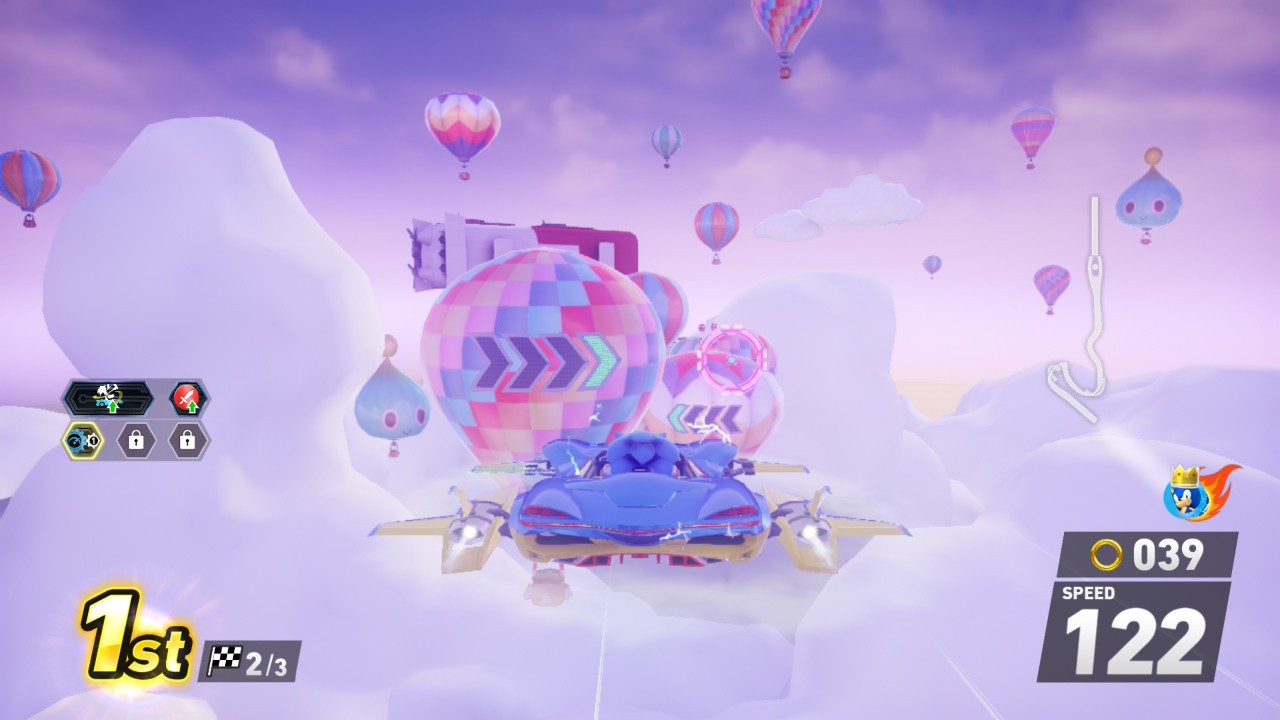
Though there’s a lot of strategy that goes into charting a racing line and figuring out when to time boosts and merchandise drops, much of a victory can hinge on selections made before you even get on the monitor. There’s an in depth choice of components you can swap out with any given kart that have an effect on stats like acceleration and weight that help give you the edge in a race, relying on your chosen loadout.
Beyond this, the Gadget system gives you a selection of passive power-ups that can stack the deck in your favour, such as growing the frequency of particular gadgets or decreasing the time it takes for mid-air trick animations to play out. I actually appreciated the customisability here, as it not only permits you to tailor loadouts to particular playstyles, but persistently rewards you and reinforces continued play.
Naturally, a massive half of the expertise here is discovered in enjoying the online multiplayer, and I’m pleased to report that it‘s just as crazy and thrilling as couch multiplayer, even if it’s a bit totally different not having someone next to you to discuss smack with.
In my expertise, there were no dropped connections or notable slowdowns, and lobbies were (clearly) full in seconds. To add a bit more to chase beyond the uncooked enjoyable of a race with actual people, there’s also a progressive rating system that awards factors based mostly on your race efficiency.
Visually, this racer is a little bit of a blended bag, combining high spectacle and sensible results with general low efficiency that notably hampers the moment-to-moment gameplay. On one hand, the programs themselves are completely beautiful, and the fixed twists in the monitor design and explosions from varied gadgets being fired make the screen a veritable feast of power and verve. On the other, the base Switch {hardware} just isn’t up to the job of working this all very nicely.
At best, this sport is working at 30fps, which is already feels barely satisfactory for a high-intensity racer like this. But the rapid-fire motion incessantly sends the body price into the low 20s to high teenagers. Add just one other participant for splitscreen motion, and the body charges sink even decrease. Performance feels roughly the same between docked and handheld modes. Combine this with the typically low and grainy decision (particularly when seen on a Switch 2 screen in handheld mode), and this is comfortably the worst means to play this otherwise pleasurable sport.
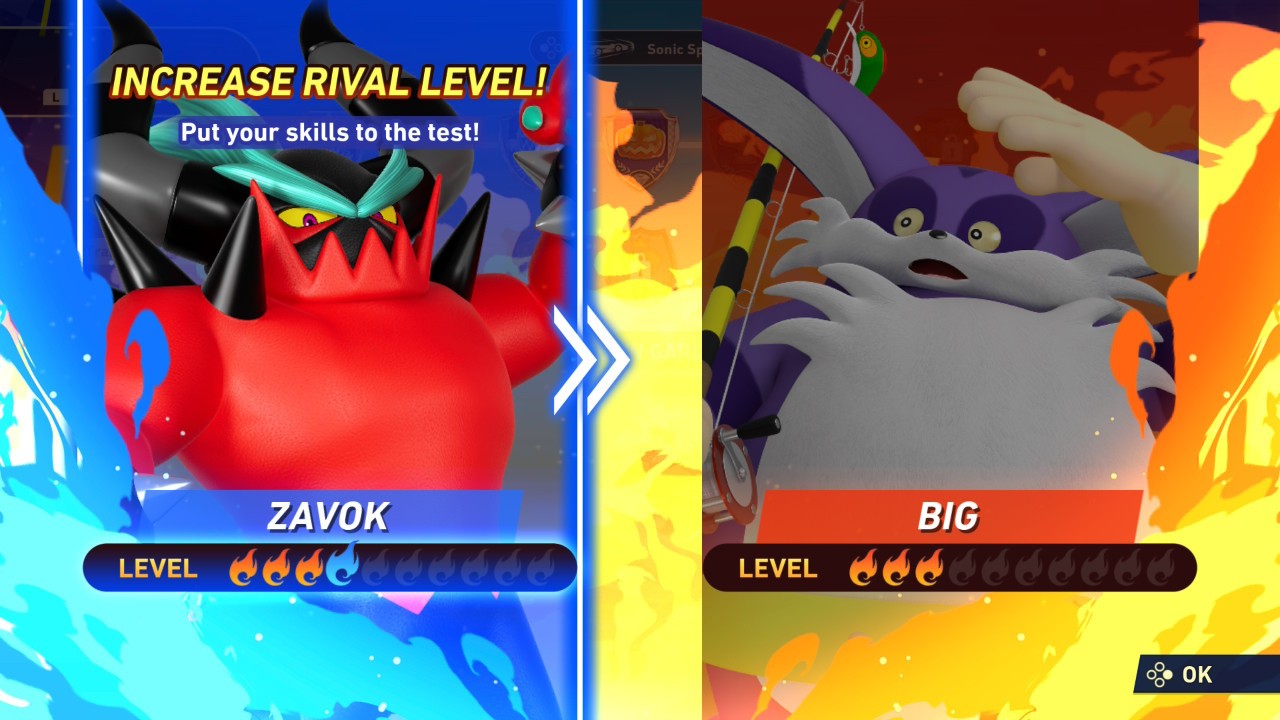
It’s far from an unplayable mess, but take one look at footage of how this seems and performs on stronger {hardware}, and — however predictable it is — it’s powerful not to really feel like the Switch port is a notably inferior product.
And whether this Switch 1 model is improved when working on Switch 2 is a bit of a toss-up. On the base Switch, you commerce S2’s quicker loading instances and considerably higher body price for a higher visible expertise, with the sport’s low decision being less noticeable on the 720p handheld screen.
Conclusion
Sonic Racing: Crossworlds is a genuinely glorious sport, but the Switch model is just ‘alright’. The dynamic monitor designs, high replayability, and thrilling visuals all mix to make for a sport that — judged purely on that content material — stands as a sturdy competitor to the dominant Mario Kart sequence.
But the poor visible high quality and decision current in the Switch model drag down the general expertise and make it really feel like a much more mediocre expertise. I’d still give this port a mild suggestion; it’s a truthful selection if Switch is the only platform obtainable to you, and in the end justifies the price of admission. Otherwise, I’d counsel ready to see how the upcoming Switch 2 model pans out, or selecting it up now on another platform.