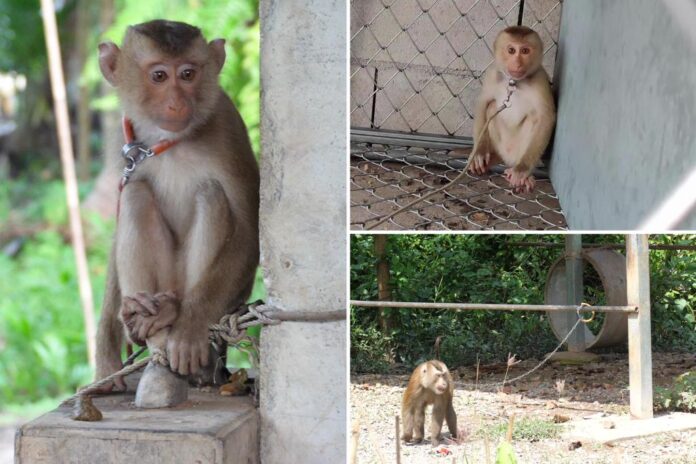
Forced monkey labor on coconut plantations in Thailand is more widespread than previously known — and some US brands and retailers are still buying the country’s coconut milk despite grisly reports of animal abuse, according to an animal rights group.
Government officials in Thailand — the world’s third-largest producer of coconut milk behind Indonesia and the Philippines — have previously denied that monkey slave labor is a problem. But an investigation by People for the Ethical Treatment of Animals claims that Thailand’s coconut industry has embraced the cruel practices almost entirely.
“We didn’t find a single monkey-free operation in Thailand, although we actively looked for one,” said Jason Baker, PETA Asia’s senior vice president who led the investigation.
PETA previously conducted two undercover investigations in Thailand beginning in 2019 that found primates are forced to pick coconuts all day with chains around their necks. The group’s probe found “cruelty to monkeys on every farm, at every monkey-training facility, and in every coconut-picking contest that used monkey labor.”

For its third investigation this year, PETA said it met with 154 farmers, pickers, processors, monkey owners, drivers, and suppliers across nine provinces, videotaping interviews and conditions at the farms. The group met with the largest coconut milk companies, Chaokoh and Aroy-D and Suree, which were the subject of the previous investigations, according to PETA.
“We are now saying ‘don’t buy any coconut milk that’s sourced from Thailand,’” Baker told The Post.
The monkeys — mostly macaques tasked with climbing trees to pick coconuts for long hours — are snatched from their mothers as babies, chained by the neck for their entire lives, and are sometimes abused by their handlers, dangled by their chains and whipped with a tether, according to the report.

When they aren’t picking, “it’s almost more tragic,” Baker said. “Then the monkeys are alone, unable to socialize, chained to trees or old tires. These intelligent animals slowly lose their minds — many of them pace and circle endlessly on the barren, trash-strewn patches of dirt where they are chained.”
Walmart, Target, Wegmans, Costco, Food Lion and Stop & Shop have cut ties with companies that allegedly use monkey labor. But meal-kit service HelloFresh and the McCormick spice company are among businesses that have resisted making a switch, according to PETA.

HelloFresh said in a statement that it “strictly condemns any use of monkey labor in its supply chain,” adding that it “has written confirmation from all of our suppliers – in the US and globally – that they do not engage in these practices.”
McCormick’s head of communications, Lori Robinson said in a statement, “We are against forced labor of any sort. Child and animal labor are strictly prohibited. Internal audits and/or risk assessments are conducted to ensure compliance, and immediate action is taken if there are violations against our code.”
Grocery chains Kroger, Albertsons, and Publix banned Chaokoh coconut milk after PETA Asia previously exposed monkey labor in the brand’s supply chain. However, they all continue to sell canned coconut milk from brands that were implicated, including McCormick & Co’s Thai Kitchen coconut milk, according to PETA.

Thailand’s Ministry of Agriculture and its embassy in the US did not immediately return emails and calls for comment.
When PETA first began its monkey labor investigations, Chaokoh, denied that primates were part of its operations, telling USA Today that its suppliers signed “memorandums of understanding” stating that they do not use monkey labor.