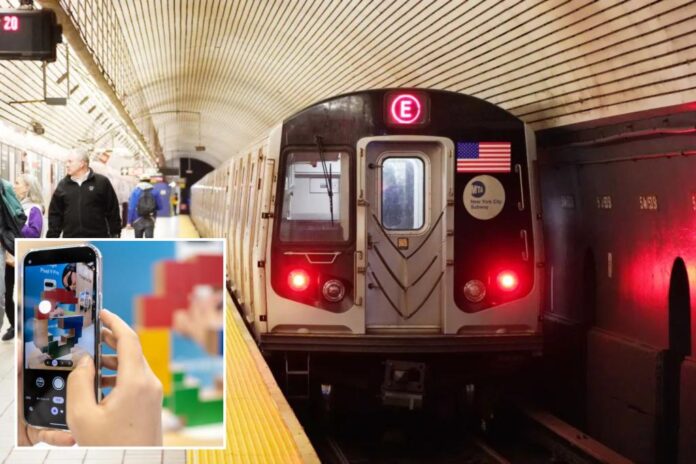

The MTA is seeking to fix the subway delays — with the help of Google’s Pixel smartphones.
Google Public Sector, which partners with government agencies, last year installed across trains Pixel smartphones that could use artificial intelligence to detect the need for track maintenance.
The idea is to find defects in the subway system before they worsen enough to cause delays.
TrackInspect — the Google-led prototype that was offered at no cost to the MTA — was so successful that New York’s transportation agency has announced it is continuing the work with Google in a new pilot program. It is unclear how much the new program will cost.
The MTA and Google did not immediately respond to requests for comment.
“By being able to detect early defects in the rails, it saves not just money but also time — for both crew members and riders,” NYC Transit president Demetrius Crichlow said in a statement released Feb. 27.
“This innovative program — which is the first of its kind — uses AI technology to not only make the ride smoother for customers but also make track inspector’s jobs safer by equipping them with more advanced tools,” Crichlow continued.
As part of the prototype program, Google retrofitted Pixel smartphones in standard plastic cases onto R46 subway cars — the old-school model with neon orange and yellow seats — along the A line.
The phones used sensors and microphones to track sounds and vibrations along the route, sending the data to cloud systems in real time.
During the initial prototype run, TrackInspect collected 335 million sensor readings, 1 million GPS locations and 1,200 hours of audio, according to the transportation agency.
An AI learning model running on Google Cloud then detected any anomalies in the data that could indicate the need for preventive maintenance.
Human track inspectors working for New York City Transit served as “humans in the loop,” checking out locations flagged by the algorithm to confirm whether there were any issues, according to the MTA.
The inspectors would provide feedback to the algorithm on whether there had been an issue, helping to improve the learning model’s accuracy rate.
The MTA hopes the AI-powered program will allow it to deploy maintenance workers before potential defects worsen, thus tamping down delays across the system.
It would be a huge leap forward for New York’s subway system, which is practically famous for its delays.
There were a total of 42,862 delays in December 2024, and 39,374 in January, according to MTA data. These delays include trains that arrive more than five minutes late, skip planned station stops or are canceled altogether.
New York wouldn’t be the first major city to use the new technology to improve its transit system, as CNN earlier reported.
New Jersey partnered with infrastructure consulting firm Aecom on a pilot program completed in 2023 that used artificial intelligence and cameras to track passengers boarding and exiting trains, providing improved real-time travel data.
The Chicago Transit Authority last year launched an AI-powered pilot program that leveraged existing security cameras to detect guns on the train system and near transit property.
A step up from its palm-scanning technology, Beijing last year introduced a program across its subway system to scan the faces of passengers and match them to a database system, eliminating the need for tickets.