
Chipotle shares surged almost 9% Thursday after the burrito-and-bowl chain reported enhancing gross sales and revealed roughly 3% menu price hikes in the fourth quarter amid rising beef, freight and labor prices.
The fast-casual giant has been step by step raising costs market by market since late last 12 months, searching for to offset inflation without driving away prospects.
“On pricing, the impact in Q3 was around 2.7%. We anticipate it will increase to about 3% in Q4,” Chief Financial Officer Adam Rymer instructed Wall Street analysts during an earnings call Wednesday.
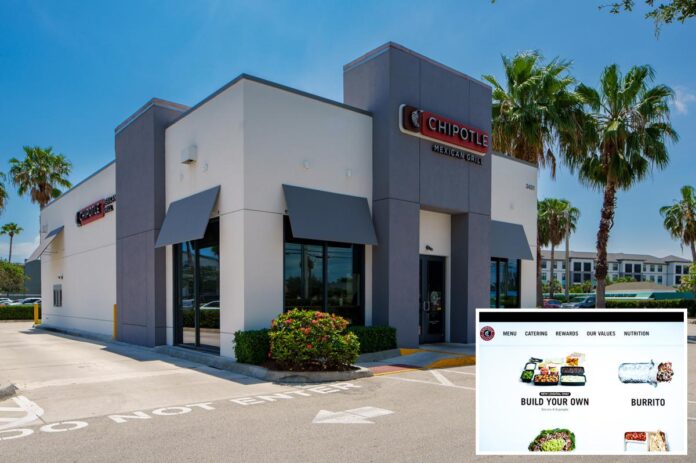
Chipotle expects the influence of its menu price will increase to attain roughly 3% in the fourth quarter as rising prices squeeze the burrito chain. Felix Mizioznikov – stock.adobe.com
The 3% projection displays the cumulative impact of price will increase launched in completely different markets, not a newly announced hike affecting every Chipotle restaurant.
The influence of Chipotle’s price will increase has grown all through 2026, climbing from 0.9% in the first quarter to 1.6% in the second and 2.7% in the third.
Chipotle initially expected menu pricing to rise 1% to 2% for the full 12 months, even as its working prices were projected to climb between 3% and 4%.
The company now expects pricing to contribute roughly 2% for the full 12 months, with menu price will increase catching up to inflation in the fourth quarter.
Higher beef and freight prices have squeezed the chain, which is also grappling with rising wages and extra bills tied to restaurant staffing.
The fast-casual chain has been step by step raising menu costs across completely different markets to offset increased beef, freight and labor bills. Agustin – stock.adobe.com
Food, beverage and packaging prices fell to 29.5% of income in the third quarter from 30% a 12 months earlier, helped by menu price will increase that partly offset increased beef and freight bills.
Labor prices, meanwhile, rose to 25.7% of income from 25.2% a 12 months earlier, pushed by increased wages, efficiency bonuses, extra restaurant staffing and insurance coverage bills.
The pricing strategy comes as Chipotle works to win back prospects following a stretch of sluggish demand.
Chipotle shares surged more than 11% this week as traders welcomed indicators of enhancing gross sales and buyer visitors.
Third-quarter income climbed 9.6% to $3.29 billion, while comparable restaurant gross sales rose 2.1%, helped by a 0.8% increase in buyer transactions.
Investors appeared to focus on enhancing gross sales and buyer visitors despite adjusted earnings of 27 cents per share falling short of Wall Street expectations of roughly 29 cents.
Chipotle has also stepped up promoting and promotions, including campaigns constructed around limited-time menu choices, to increase buyer visitors.
Marketing bills accounted for a proportion of gross sales in the mid-3% vary during the third quarter and are expected to climb into the high-3% vary in the fourth as Chipotle promotes its smoked brisket offering.
Chipotle CEO Scott Boatwright said in April that the chain’s entrée costs were roughly 20% to 30% decrease than those of competing fast-casual eating places.
Chipotle’s fourth-quarter pricing influence is expected to attain roughly 3%, up from 2.7% in the third quarter. Jeffrey Greenberg/Universal Images Group via Getty Images
Still, increased menu costs haven’t spared Chipotle from continued stress on its revenue margins.
Chipotle expects fourth-quarter restaurant-level working margins to fall to just under 22% from 23.4% a 12 months earlier, as increased advertising bills and weaker gross sales leverage squeeze profitability.
Several Wall Street companies cut their price targets, citing issues about a slower restoration in revenue margins despite indicators of enhancing buyer visitors.
Bernstein lowered its price goal from $50 to $43, RBC from $45 to $40, and BMO from $52 to $50.
Chipotle expects comparable restaurant gross sales to rise roughly 2% in the fourth quarter as it continues testing price will increase in particular person markets to gauge buyer resistance.