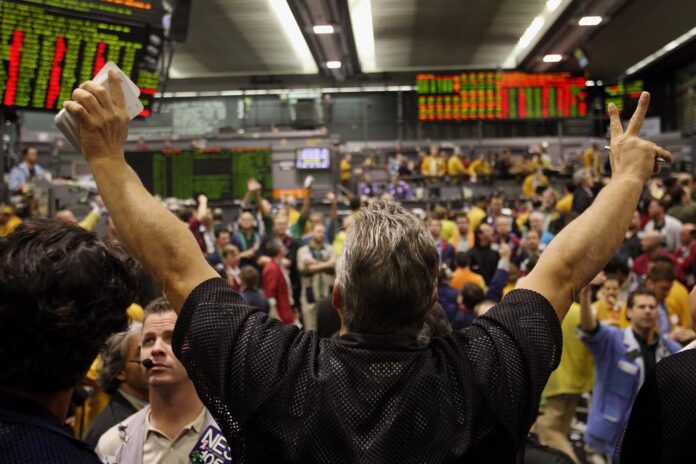
It was a disappointing election season for Republicans, but it was great for stocks — with the Dow up more than 1,100 points since last Tuesday’s poll results.
This shouldn’t have been a surprise. Said simply: In good times and bad, US midterm elections are the most consistently profitable periods in stock market history. Since 1925, the nine months starting Oct. 1 in a midterm election year and extending into the first half of the following year saw the S&P 500 go negative just twice — the last as World War II started — and with overall 19.5% average returns.
The trend endures through the entire third year of US presidents’ terms, which also haven’t been negative for the S&P since 1939 — and then only off 0.9%.
I’ve long called it the “Midterm Miracle.” It works. Why? Because the president’s party nearly always loses at least some power to the opposition in midterms. That in turn forces the president’s party to attempt the biggest, most controversial legislation it can hope for before the midterms. Democrats did it big-time with their mega bills in 2020 and 2021. They always do.


Big, controversial legislation always creates winners and losers whether through taxes, regulation, property rights — whatever. That gets the losers riled and fearful of more to come. You may have noticed that this year.
Behavioral economists Richard Thaler and Shlomo Bernartzi documented decades ago that normal Americans hate losses two and a half times as much as they love gains. After midterms, rhetoric remains but legislation quiets. Political risk falls and demand for speculative assets rises.
Hence, the ‘Miracle’ — which no one ever believes because they think if their side loses, the country loses. It works because no one sees it coming.


As I write, the GOP has won 217 seats needing just one more for formal control. They lead in four more, like California’s 3rd Congressional District , where the remaining ballots mostly come from Republican turf. That gets us to 221 of the House’s 435 seats. In other words, hardcore gridlock.
Perhaps you think the ‘Miracle’ won’t work with such a slim majority — that Democrats carving off a few votes here and there can pass their bills. Nevertheless, whichever party controls the House or Senate 100% controls what can be voted upon. It’s why gridlock works legislatively, creating the calming effect.
The ‘Miracle’ also works overseas. The largest European stock indexes have never been negative during the US midterms. European investors, it turns out, are even more loss averse than Americans yet highly attuned to our politics. Long ago Meir Statman and I duplicated the Thaler/Bernartzi methodology with European data to show their higher risk aversion. But the correlation is consistently high during the ‘Miracle’ regardless of cause.

It also makes sense this way: With gridlock, businesses get a few years of relative calm when it comes to regulation and taxes, hence a longer horizon for planning and capital investment.
My half-century experience as an investment professional also has taught me individual investors are about two-thirds more conservative than leftist. Gridlock guards against leftist legislation, calming conservative investors. This election may not have been what you wanted. But it gives you a stock market you will like.
Ken Fisher is the Founder and Executive Chairman of Fisher Investments, four times New York Times bestselling author, and regular columnist in 17 countries globally.